
Notice

Due to the ongoing situation with COVID-19(Coronavirus), the events originally scheduled for 2022 may be postponed or cancelled.
Please check the original website before you actually schedule them.

"Asageshiki" Mount Futaba trekking tour; breakfast bento while viewing a superb panorama included.

Wouldn't it nice to enjoy a delicious breakfast while viewing the city of Hiroshima and the Seto Inland Sea after climbing up to a small mountain (Mount Futaba, 139 meters above sea level)?
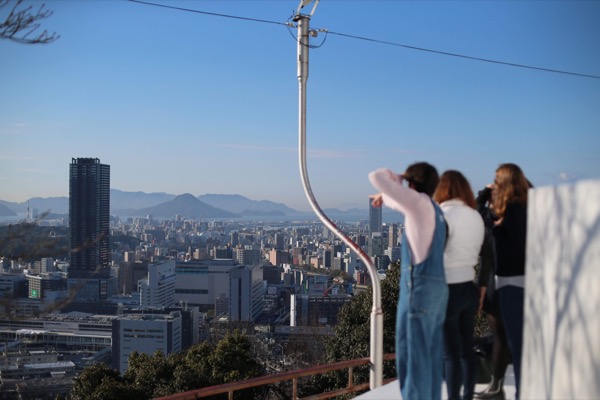
Many tourists obtain the image of a "beautiful city" after visiting Hiroshima.

In 1945, the city certainly became scorched land; but since then, it has been through a remarkable reconstruction and has been developed into a city full of greenery.


Let's go trekking to a spot where you can overlook the city of Hiroshima, and enjoy meal with your trekking mates.

The meal eaten outside after exercising should be exceptionally delicious.

Breakfast at Okumiya, Kinko-Inari Shrine, Hiroshima

Breakfast Bento, Hiroshima, Asageshiki
Bento
Breakfast Bento for Vegetarians and Vegans, Hiroshima, Asageshiki
Bento for Vegetarians and Vegans


History of the destination

The starting point is "Hiroshima Toshogu" -広島東照宮-, which locates about 8-minute walk from Hiroshima Station.

hiroshima toshogu shrine


Speaking of "Toshogu", "Nikko Toshogu" -日光東照宮- in Nikko, Tochigi near Tokyo, is famous.

The shrine named including "Toshogu" enshrines Ieyasu Tokugawa -徳川家康-, who established the SAMURAI government called the Edo Shogunate, which lasted from 1603 to 1867.


So why is the Toshogu Shrine in Hiroshima?


It was built in 1648 by Mitsuakira Asano -浅野光晟-, the grandson of Ieyasu Tokugawa -徳川家康- and the lord of the Hiroshima domain at that time. It was said that he built it to pay homage to his grandfather, who died in 1616, as well as to have wished for peace in Hiroshima.


Looking at the positional relationship with Hiroshima Castle, this Toshogu is located in the northeast.

In Japan, the northeast direction is called "Kimon" -demon's gate- and is considered to be an ominous direction where bad things come in.


He probably wished for peace in Hiroshima, by setting up this Toshogu Shrine to the northeast of Hiroshima Castle and preventing bad things from entering. 

Route

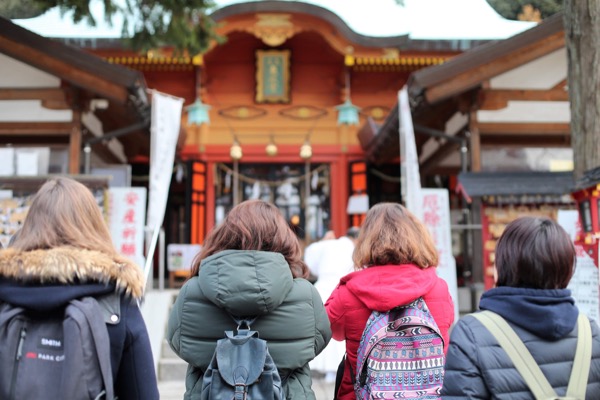
Start climbing from Hiroshima Toshogu Shrine, walk through Kinko Inari Jinja -Inari Shrine- and reach to Okumiya. There are many red torii gates that are donated by believers, called Ujiko, who live in limited area surrounding this shrine. 


If you look at each torii gate closely, you can see its donor’s name, address, and the date of donation.

Go up through the red torii gates and arrive at Okumiya, and you will face a magnificent view.

In the distance, you can see a beautiful triangular mountain.

It is an island in the Seto Inland Sea called Ninoshima.

Take your time and enjoy breakfast while viewing the cityscape and the islands of Hiroshima!


asageshiki, view from Mt. Futaba, Hiroshima


Notes

Duration: 3 hours

Meal: Bento (packed meal) is to be provided.

Vegetarian and Vegan menu available.

(Another option available; no meal, but tea will be served instead.)

Green tea, Futaba-no-sato, Hiroshima

Things to bring with you:

Bring insurance card, towel, drinks. / Wear easy-to-move clothes, sneakers.


Terms and Conditions of participation

-Minimum age of 6

-If you have any concerns about health condition, please inform it in advance.

-The tour cancellation may be caused due to the weather condition; in case of cancellation, the transportation fee to the starting point cannot be compensated.


Reservation

Need to be made by 6PM a day before.


Meeting Point

Pedestrian Deck on the 2nd floor at Hiroshima Station 


Comments

Popular Posts

KONISHI KOI FARM

How deeply Hiroshima is related to carp, or koi, can be seen in the name of its professional baseball team, Hiroshima Toyo Carp, the carp castle, the alias of Hiroshima Castle, and the fact that there is a town named Koi (the large residential area in Hiroshima City) .  Hiroshima has long been known as one of the two major Nishikigoi (the carp that have colors and patches and are raised as ornamental fish )- producing areas in Japan. One Koi farmer has a history that dates back even more than a century ago. Konishi Koi Farm is the world’s oldest Nishikigoi breeding farm.  In recent years, its name has been found in a German guidebook "REISE-KNOW-HOW" as well as in JAPAN HOUSE in Sao Paulo, established as a Japanese national project.  Konishi Koi Farm has also donated the Nishikigoi swimming gracefully around in the moats of Hiroshima Castle or in the pond in Shukkeien Garden, a traditional Japanese garden in the city. Not only do they have a long history, but ...

A sea route that connects two UNESCO world heritage sites in Hiroshima

There are two world famous UNESCO world heritage sites in Hiroshima, “Atomic Bomb Dome” and “Itsukushima shrine”. As for the transportation, there is a “World Heritage Sea Route” that directly connects these two world heritage sites, besides railways (Streetcar and/or JR train) and Ferry combination; what’s more, it takes only 45 minutes, the fastest way to go back and forth between these two locations. As one of the busiest areas in Hiroshima, there used to stand variety of markets and inns in a row around Peace Memorial Park. You can see its remnant of old days by seeing the stairs down to the river. It is called “Gangi”, and was used for loading/ unloading stuff in and from boats carried along the river. Enjoy a short trip to Miyajima, finding different side of the history in Hiroshima. For further information including the fare and the timetable: http://www.aqua-net-h.co.jp/en/heritage/ Motoyasu Pier Miyajima 3rd Pier

A way to enjoy another face of Miyajma; "Nana-ura Meguri", a tour to visit seven shrines along Miyajima by a private yacht

Speaking of Miyajima, most of you would imagine O-torii gate in Itsukushima shrine. It is about only 1 km from Miyajima Port, the entrance of the island, to Itsukushima Shrine on Miyajima Island, but the island’s outer circumference is about 30 km. It may be bigger than you can imagine. The town area in Miyajima you see may be full of people. Then, what's in the rest of the area in the island where many tourists don't go? Itsukushima Shrine is a place where God is enshrined. It is said that the god enshrined now searched around the island to find a good place to build a shrine before deciding the location of the current Itsukushima shrine. People gradually started to go around the island and visit the shrines in the seven ura (coves), just as following the action this god took. This is the origin of " Nana-ura Meguri " meaning visiting seven coves. By the way, if you try to complete " Nana-ura Meguri " - visiting all seven shrines-, you have to approach fro...